
Centre's move to form a 29-member panel on making the minimum support price (MSP) mechanism effective and keeping three positions vacant in it for SKM representatives has triggered strong disapproval from it.
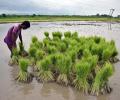
Trade and market players have already started factoring in at least 10 million tonnes drop in production in rice in the kharif season as compared to last year due to delayed sowing.
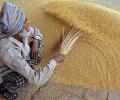
A head of its meeting, the Reserve Bank of India (RBI) can take some solace from the softening food commodity prices. However, the events surrounding the last few weeks show that the fall may not be uniform across all commodities, and cereals like wheat and rice could be the outliers. A Reuters report said that local wheat prices jumped to a record Rs 23,547 per tonne on Wednesday. That is a 12 per cent rise from the recent lows that followed the government's surprise ban on exports on May 14.

Nearly eight months after the government repealed the three controversial farm Acts, it has constituted a high-powered panel under the chairmanship of former agriculture secretary Sanjay Agarwal to make the minimum support price (MSP) mechanism more effective and transparent as promised by Prime Minister Narendra Modi in his televised address announcing the repeal. The names of three members from the Samyukta Kisan Morcha (SKM), the main grouping that spearheaded the year-long agitation at Delhi's borders, have been withheld, pending receipt by the government, stated a gazette notification. NITI Aayog member Ramesh Chand, Indian Institute of Management-Ahmedabad Professor Sukhpal Singh, Indian Farmers Fertiliser Cooperative chairman Dilip Sanghani, secretaries of the Departments of Agriculture, Indian Council of Agricultural Research, Food and Consumer Affairs, Cooperation and Textiles, along with representatives from the state governments of Karnataka, Andhra Pradesh, Sikkim, and Odisha will also form part of the panel.

While the experience of summers has been uncomfortable, the actual readings on thermometers may cause wonder about the exaggerated discomfort. This is what meteorologists call 'real feel temperature' or 'real feel heat'. Sanjeeb Mukherjee explains.
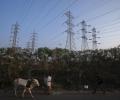
Two years after the Centre's flagship village electrification scheme Saubhagya concluded with the government claiming 99.9 per cent success, several states have added close to 1.1 million rural households that remain to be connected to the electricity grid. This new list includes earlier unwilling households that have now agreed to have a metered connection and also those built or discovered in the states' surveys since 2019. Assam and Uttar Pradesh are the states that have the majority of such new additions.

Eleven bidders, including Adani Enterprises, have shown interest in the first-ever coal import tender issued by national miner Coal India (CIL). Recently, state-owned NTPC awarded 6.25 million tonnes (mt) of imported coal tender worth Rs 8,300 crore to Adani Enterprises. CIL, in a public statement on Tuesday, said: "The prominent Indian agencies among them (11 coal importers) were Adani Enterprises, Mohit Minerals, and Chettinad Logistics. "A couple of coal exporting agencies from abroad, including one from Indonesia, have also shown interest," it said.

With the cooling down of heatwaves as the monsoon spreads across the country, power demand has fallen by 12.5 per cent from the start of this month till Monday. Peak power demand of the country had touched a record of 210 Gw last week, mostly due to rising temperatures and opening up of the economy. Compared with the beginning of this month, almost all states have seen a fall in power demand. Punjab, however, is an exception where the power demand on Monday was 17 per cent higher than on June 1.

Even as Union ministers allay misgivings over Agnipath, figures show a meagre 2.4 per cent of the ex-servicemen who applied for a government job could get one as the Centre and the states have been unable to recruit against the reserved quotas. Public sector undertakings (PSUs), ministries, and officials of Sainik Boards have blamed it on the lack of skill among ex-servicemen. They say veterans' inability to qualify in selection exams is one of reasons for this. Also, non-recognition of qualifications obtained from the military are reasons why their recruitment has remained significantly low, pushing them towards low-skill jobs.

It's still early days, but the southwest monsoon has been nearly 37 per cent 'below normal' in the first seven days (June 1-7) of this month. According to the data furnished by the India Meteorological Department (IMD), between June 1 and June 7, India received 14.5 millimetres (mm) of rainfall, against a 'normal' 23.1 mm. Among places where rains have arrived, monsoon in Kerala in the first seven days has been 48 per cent 'below normal', while in Puducherry, it has been 56 per cent 'above normal'. In Tamil Nadu, rains were 21 per cent 'above normal' between June 1 and June 7.

Prime Minister Narendra Modi and chief ministers of states may soon have an in-person interaction on a common platform for the first time since 2019. The seventh meeting of the Governing Council of NITI Aayog is likely to be held in late June or early July, Business Standard has learnt from sources in the Centre and a state. While the date and other details are yet to be finalised, it is learnt that there will be a conclave of chief secretaries of states and Union Territories in Dharamshala, Himachal Pradesh, on June 14 and 15, which will decide the agenda of the Council meeting to be held at a later date.

Around 31 million households have demanded work under the flagship MGNREGA in the month of May this year, which is almost 11 per cent more than the same period last year and much higher than the corresponding pre-Covid period, data sourced from the website showed today. In April 2022, around 23.26 million households have sought work under the scheme which as per the provisional data for May has risen to almost 31 million households. The April 2022 work demand was almost 11.15 per cent less than the corresponding period of April 2021.

Skymet says the IMD ignored the required criterion of two days of necessary rainfall to declare a proper onset of monsoon, reports Sanjeeb Mukherjee.

After a ban on wheat exports, India's cereal grain procurement for the central pool was struggling to rise significantly until the middle of last week, informed trade and market sources. Farmers have been holding on to their produce as the price of wheat in the open market recouped some of the losses it suffered in the aftermath of the ban. According to trade estimates, around 18.12 million tonnes (mt) of wheat was procured in the central pool up until May 18. Before the export ban was enforced on May 13, it was 17.96 mt.
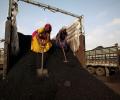
Coal production by Coal India (CIL) has grown slower than the captive mines, awarded over the last six years. During 2020-22, production from the captive mines jumped by 38.5 per cent while CIL saw a tepid growth of 3.4 per cent, according to government data. In terms of dispatch to the power sector, captive mines have raced ahead, witnessing a growth of 72 per cent compared to 15 per cent for CIL. For the current fiscal year, CIL's production is expected to be around 565 million tonnes.

The Union ministry of coal, while acknowledging that domestic coal stock is not enough to meet the power demand, asked state governments and the power generating companies (gencos) to import coal before monsoon season sets in. The ministry has warned the gencos if they do not import coal for 10 per cent blending in their fuel demand by the end of this month, blending benchmark would be increased to 15 per cent. The order pertains to all - central, state and independent power producers (IPPs)/privately owned units.

Indonesia, the world's biggest supplier of palm oil, said on Thursday it will lift a ban on exports from Monday, likely helping India and other importers. India annually imports around 13-13.5 million tonne of edible oils, of which around 8-8.5 million tonnes (around 63 per cent) is palm oil. Of this, 8-8.5 million tonnes of palm oil, 45-50 per cent comes from Indonesia and the rest from neighboring Malaysia.

'Our competitiveness with China is very important.' 'If the exchange rate depreciates, it is good for us because it helps in our competitiveness.'
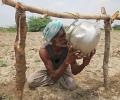
Santosh Patkar of Devgadh Taluka Sindhudurg district of Maharashtra is a worried man these days. Devgadh, which is known as the home to world famous Alphonso variety of mangoes, has seen an unusual drop in yields which is affecting farmers' income. Being one of the primary agricultural produce from the area, Santosh is not untouched by this somewhat rare phenomenon. He said in his own mango garden, yields have come down by a third from most trees.

Earlier this month, the Central government said in a reply in Parliament it had taken measures to double farmers' income by the end of FY23 and the progress made so far indicated it was "on the right track". However, a close look at the data and at the assumptions made shows that as of now, it appears the country is unlikely to achieve the goal in real terms.
 © 2025 Rediff.com - Investor Information - Advertise with us - Disclaimer - Privacy Policy - Sitemap - Feedback - About us - Terms of use - Grievances